Presence Is Not Pedagogy: A Pedagogical Layer for LLM-Driven Agents Ongoing
A layer between the language model and the embodied agent that makes the teaching decisions, so the model only has to fill in the words.
2026 - Now, Associated with: Relational Agents Group, Northeastern University; Prof. Timothy W. Bickmore
On the Problem Map: 1.1 Content ≠ pedagogy1.3 Can tell ≠ can teach2.1 Learners are different3.2 Timely intervention
Background: liked, but not learned from
Embodied agents driven by large language models can now explain a medical pamphlet in fluent, friendly language. In our earlier study, patients liked such an agent, and they learned no more from it than from the printed pamphlet. My argument is that this is a design problem, not a model-size problem. A language model does not carry a teaching plan: it does not know which idea to teach first, what the patient already understands, when to ask instead of tell, or how to check whether anything stuck.
The model fills in the words; the layer decides what the words are for.
What the layer does
- Compiles the pamphlet into a concept map with prerequisite links and insight targets, the few ideas a patient must leave with.
- Chooses teaching patterns from a written set of 24, so a lesson has a shape before it has sentences.
- Builds each turn from a vocabulary of 363 typed teaching actions instead of free-form generation.
- Stops at activation questions and collects the patient's answer before revealing the next step.
- Follows a written manual when the patient asks a question or makes an error.
- Checks every utterance and question against written rules before a lesson is accepted.
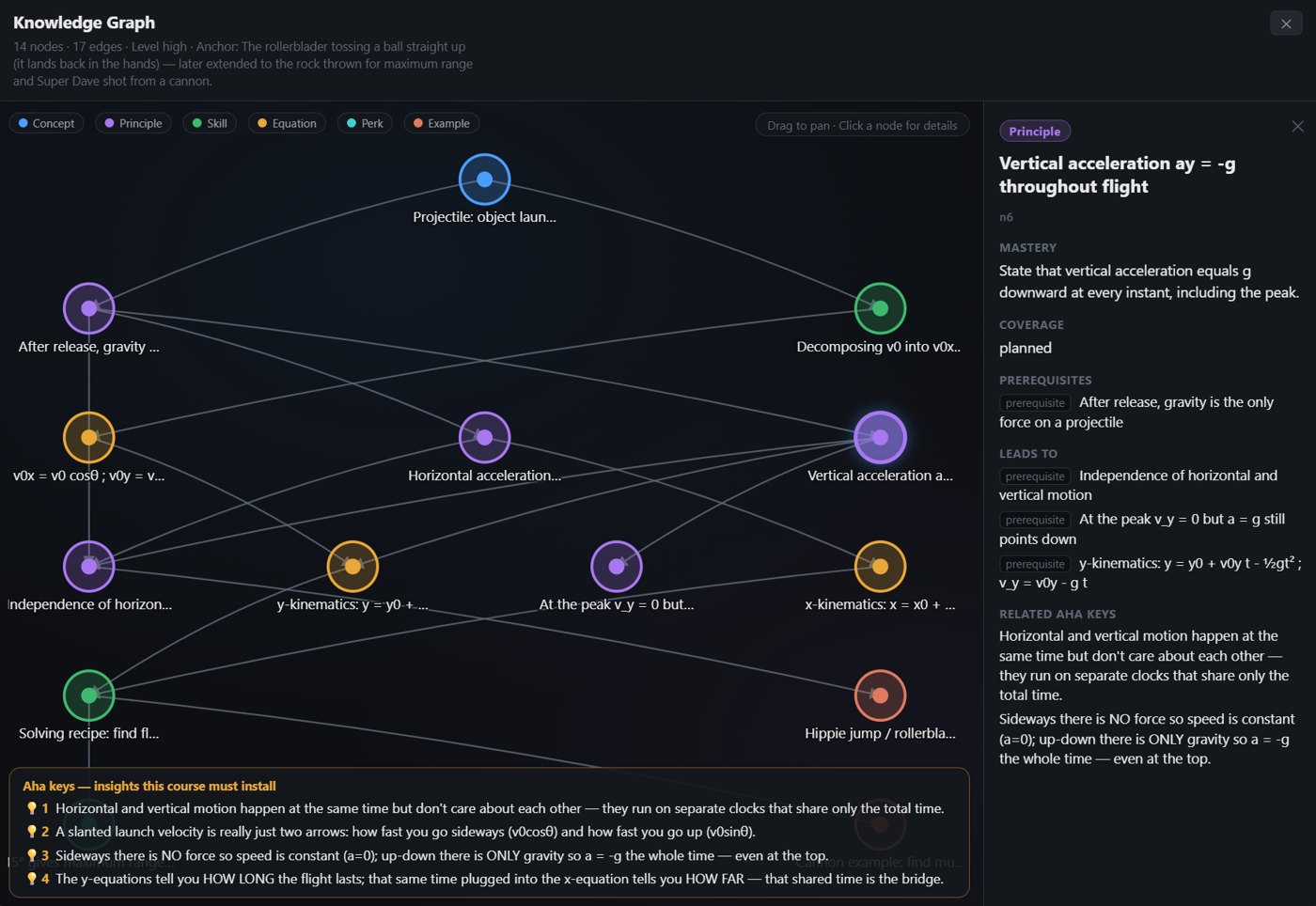
A concept map with prerequisite links and insight targets ("aha keys")
Where the teaching assets come from
The patterns, actions and concept-map format were first built and tested in my K-12 work outside campus (AI PBL Agent) and then transferred to patient education. Three things make that transfer reasonable: most of the teaching patterns are anchored in research with adults, so K-12 was where they were compiled and tried, not the limit of where they hold; patient materials are already written for middle-school reading levels; and patient education adds a safety shell on top (source locking, red-flag information that may never be softened), which is part of the contribution.
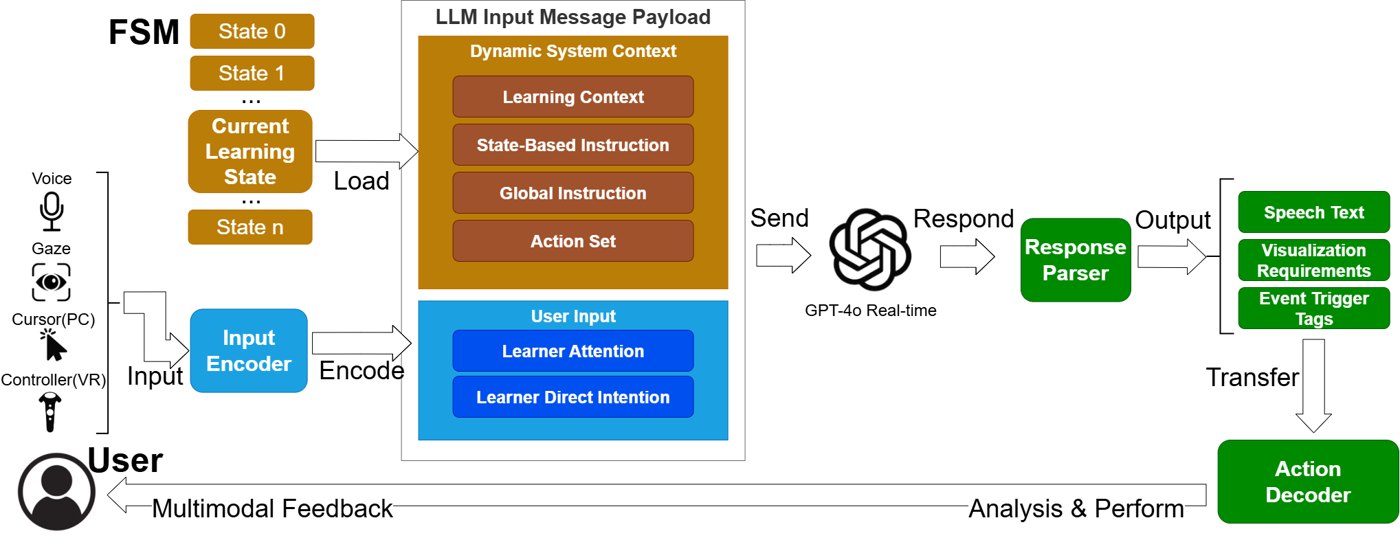
The current agent's turn assembly, which the layer now feeds with explicit teaching decisions
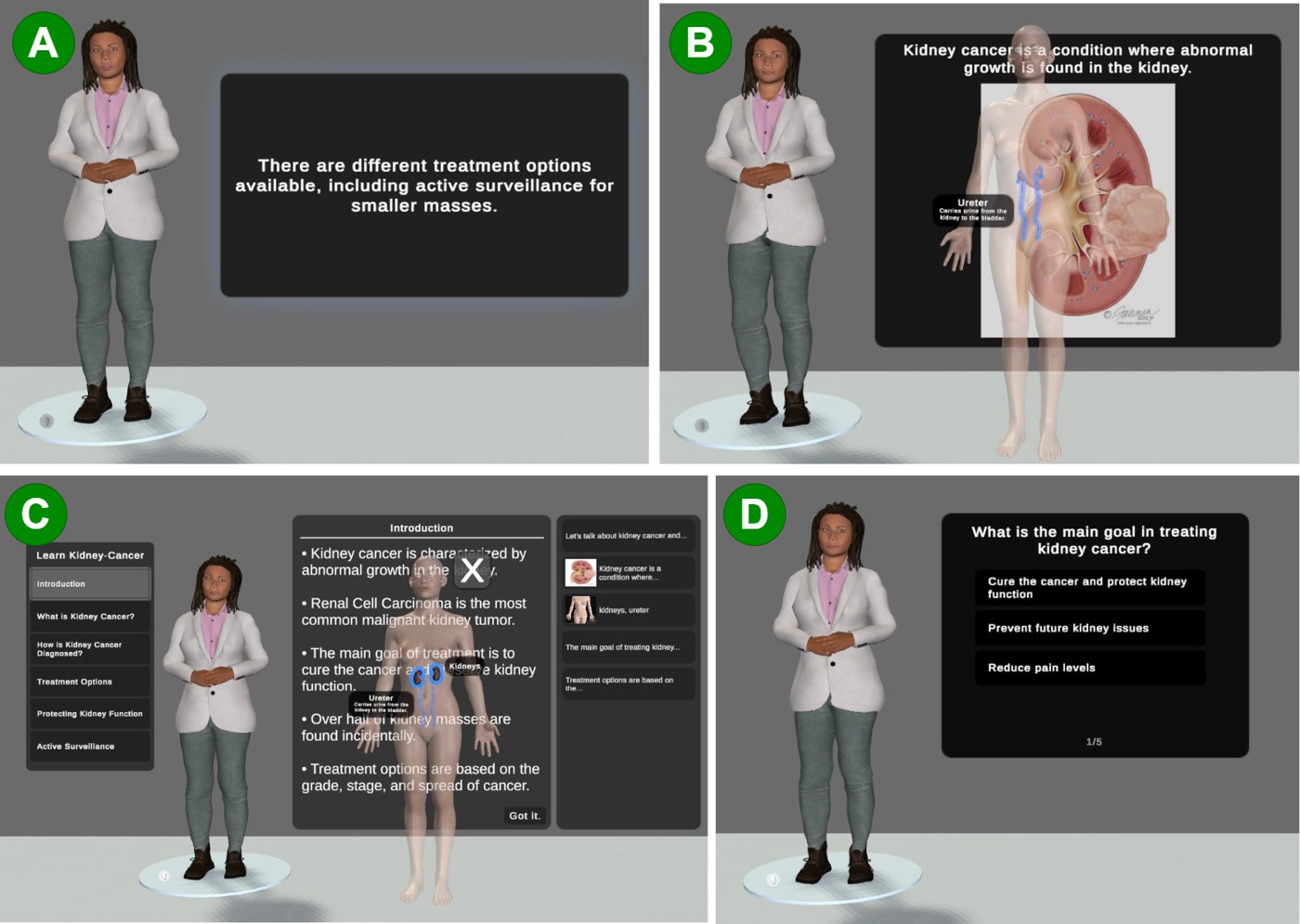
The embodied agent the layer drives
Study
A between-subjects study compares the layered agent with an otherwise identical agent driven by a single structured prompt. The primary outcome is delayed, unassisted comprehension: what a patient still understands later, without the agent in the room. The study is being prepared now.
My Major Roles & Contributions
- Proposed the layer and its framing, and designed how the teaching assets transfer from K-12 to patient education.
- Built the layer and its integration with the VR agent.
- Designing the comparison study and leading the paper.
Highlights
×
![]()