AI PBL Agent: Project-Based Learning with a Teaching-Aware Agent Ongoing
A personal project outside campus: helping K-12 teachers turn a lesson plan into an interactive project-based course, with an AI companion for every student that tutors instead of answering.
2023 - Now, a personal project outside campus, piloted with K-12 teachers
On the Problem Map: 1.1 Content ≠ pedagogy3.3 Motivating the other 95%3.4 Tutor authority4.2 Available ≠ adopted
Where it started
My path into AI education started from games. Every time I tried to make a game that people kept playing, the answer turned out to be in learning theory: a system people want to keep playing is a well-designed learning experience. That is what took me to Columbia's Teachers College. When ChatGPT arrived, one-on-one teaching that follows a student's own questions suddenly looked affordable, and project-based learning (PBL) stood out as the format schools want most and teachers find hardest to prepare.
The bottleneck in AI education is not model capability. It is teaching logic.
What it does
- Teacher side. From a lesson plan, the agent proposes a driving question, breaks it into sub-tasks on a mind map, and builds knowledge blocks and interaction blocks (interactive pages, role-play scenarios, visualization tools, exercises) with milestones. The teacher edits or regenerates any block; the AI proposes and the teacher has the final say.
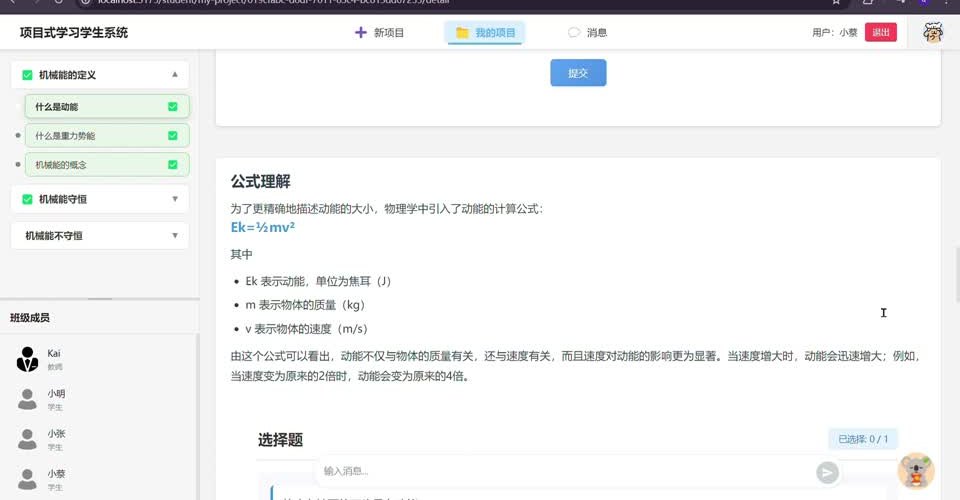
- Student side. Learning and doing alternate. An AI companion asks context-aware Socratic questions instead of handing out answers, and the agent can generate adjustable science simulations on the fly, such as a pendulum for conservation of energy.
- Learning analytics. Work is summarized at the sub-task, milestone and project level, and the system surfaces the student questions most worth a teacher's attention.
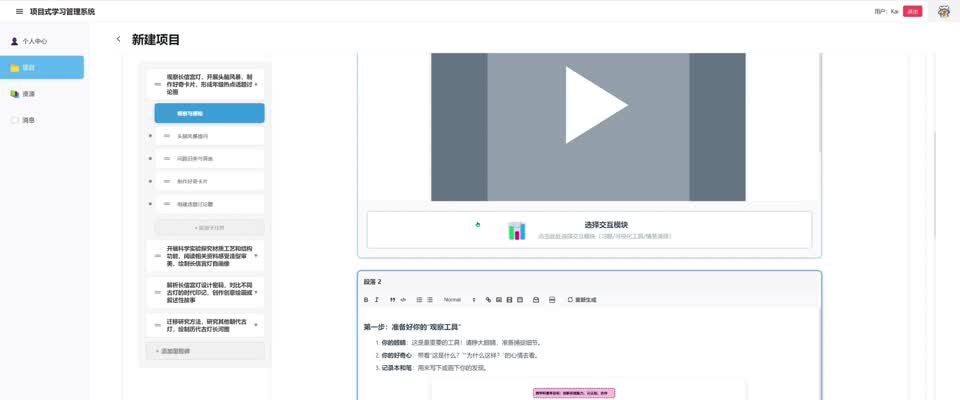
Teacher side: editing a chapter
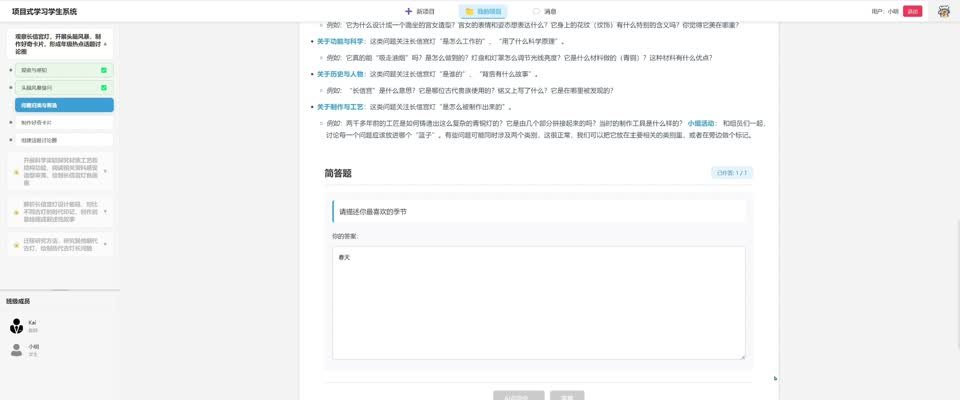
Student side: AI-guided learning
The real problem: conversion is not generation
To find out why the agent's courses felt one step short of usable, I decomposed a high school math PBL unit by hand: 6 chapters, 22 sections, 53 blocks, and 3 interactive tools built from scratch, each iterated 8 to 10 times for physical accuracy. The diagnosis was clear. The old agent treated course conversion as content generation: it rewrote like an author instead of translating the teacher's plan like a translator. The right frame is half faithful, half enhanced: structure follows the teacher, and the product makes active choices inside each block.
Compiling pedagogy into data contracts
The same root cause showed up on both sides: teaching decisions and text generation were mixed in one prompt, so the model took the easy path and skipped the decisions. The rebuild follows one principle: decisions go through structure (lookup, rules, validation), generation follows discipline (schemas, budgets, linters), and the language model only fills in content.
- 24 subject-independent teaching patterns, each an ordered set of slots.
- 363 atomic teaching actions in 18 families, with elementary, middle and high school views.
- 26 companion guidance moves; every companion turn must be exactly one of them.
- A map from each teaching slot to the companion moves it allows or bans (no answers during discovery, no ghost-writing during creation).
- Chapter-level "aha keys" so every section of a chapter aims at the same insight.
- Research evidence screened through an adversarial audit: 26 findings adopted into the design, 9 rejected.
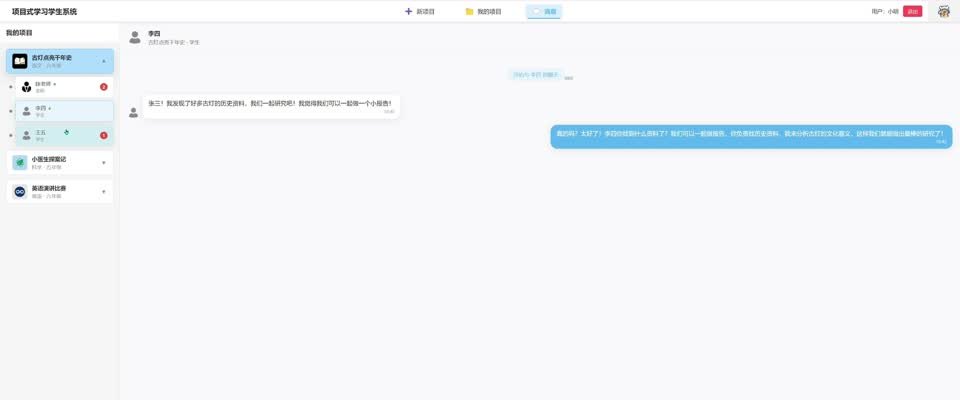
Teacher and students in the same workspace
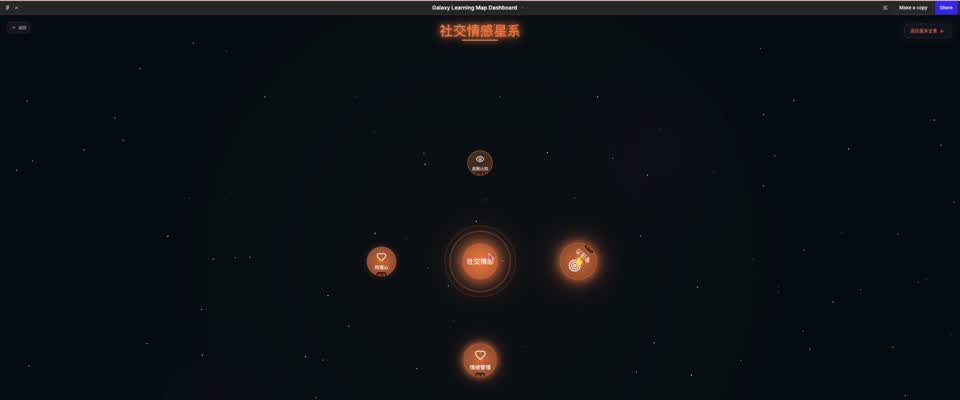
Student side: a map of growing abilities
What carried over
The same teaching assets now power Keyi and the pedagogical layer in my PhD work on patient education: one method, three settings.
My Major Roles & Contributions
- Lead the project: product design, pedagogy architecture, and the agent design on both teacher and student sides.
- Hand-decomposed the benchmark course and wrote the engineering specifications for the rebuild.
- Work directly with teachers to turn their needs into structured requirements before anything is built.
Highlights
×
![]()